Español
 English
 Français
 Русский
 عربي


How to Select an Industrial Scanning Platform for NEV Component DPM Laser Code Traceability
Selecting an industrial scanning platform for new energy vehicle (NEV) component DPM laser-engraved code traceability requires evaluating AI algorithm performance on non-standard codes, optical adaptability to mixed materials, and the validity of environmental protection certifications. Buyers should not rely solely on basic decoding specifications. Instead, model suitability must be determined by matching the platform's technical boundaries—such as deep learning optimization, dual-color light source polling, and verified IP ratings—against the specific surface conditions, operational hazards, and data continuity requirements of the production line.
Evaluating AI Deep Learning Algorithms for Non-Standard DPM Codes
When a production line handles a large volume of non-standard codes and complex surfaces, determining whether an industrial scanning platform's AI deep learning algorithm is genuinely optimized requires looking beyond marketing terminology. Traditional hard-decoding algorithms depend heavily on barcode completeness and high contrast. In contrast, AI algorithms achieve feature enhancement and intelligent completion through training on massive industrial samples.
For NEV components featuring metal DPM laser-engraved codes, low-contrast carbonized codes, or severely reflective surfaces, platforms equipped with AI deep learning algorithms are necessary. However, this optimization capability is the result of training on specific industrial samples. If the actual production line presents unseen special non-standard codes that differ significantly from the training data, misreads may still occur. Therefore, buyers must verify the algorithm's measured read rate using actual sample codes from their specific application, rather than assuming the algorithm name equates to universal decoding capability. Frequent manual interventions due to unreadable codes directly translate into line stoppage losses.
Red/White Dual-Color Light Source Polling vs. Single Light Source
For mixed-material workpiece flow lines, the optical design of the scanner directly impacts the first-pass read success rate of laser-engraved codes. Red/white dual-color area light source polling technology automatically switches illumination wavelengths. This eliminates the blind spots that single light sources encounter on metal reflections, dark backgrounds, or low-contrast materials.
If a buyer selects a general-purpose device with high resolution but a single light source for a mixed-material line, the lack of optical adaptability will likely require operators to manually adjust angles during product changeovers. This manual intervention offsets the cycle time improvements intended by automation. When comparing models, the presence of dual-color light source polling should be treated as a critical specification for scenarios involving varying surface reflectivity and material types.
Validating IP Ratings and Mechanical Durability Specifications
Environmental protection and mechanical durability parameters must be scrutinized for verification methods, not just nominal values. There is an essential difference between a manufacturer's claimed IP65 rating and a test report issued by an authoritative third-party organization (such as PSI) based on the IEC 60529 standard. Third-party certification specifies exact test conditions, such as no water ingress under omnidirectional water spray from a 6.3mm nozzle. This directly affects equipment survival rates in harsh industrial environments involving dust, oil, and washing. Relying only on claimed IP ratings without third-party reports can lead to deviations in failure rate estimates, affecting annual spare parts budgets and unplanned downtime cost calculations.
Similarly, drop resistance determines mechanical lifespan and Total Cost of Ownership (TCO) in high-frequency mobile operations. A 3m drop resistance capability is significantly higher than the industry mainstream standard of 1.5m to 1.8m, reducing the probability of damage from accidental drops in heavy machinery workshops or logistics areas. Buyers should not view drop height in isolation; it must be evaluated alongside actual workshop operating heights, floor materials, and personnel handling protocols to quantify the reduction in annual replacement rates and maintenance hours.
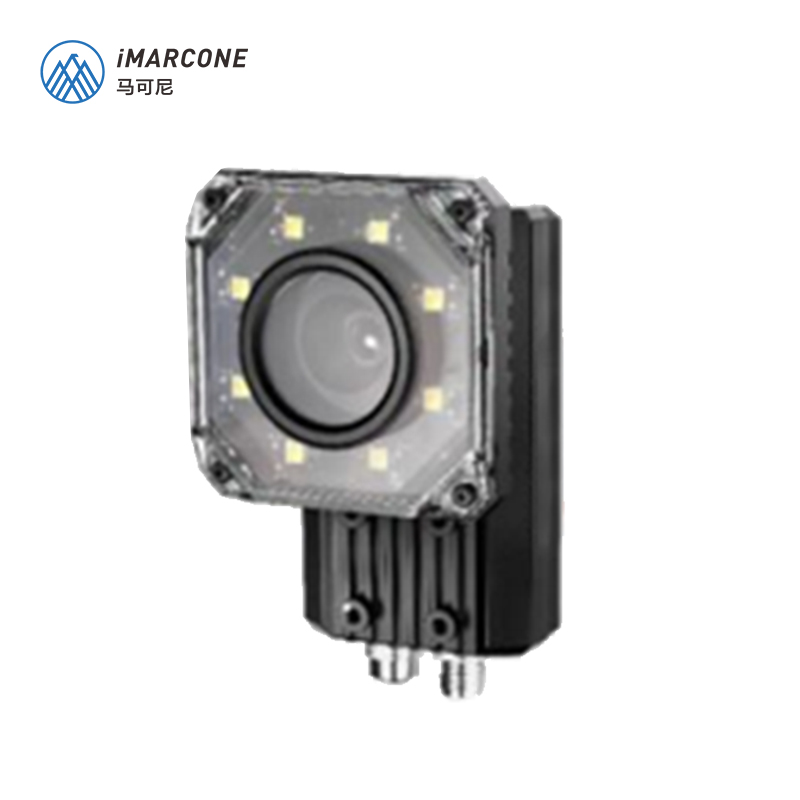
The following table outlines how specific technical parameters align with application conditions for industrial scanning platforms, referencing the iMARCONE DP-7713-DPX-GB as an example of a platform designed for these criteria.
| Evaluation Parameter | Application Condition / Requirement | Selection Criteria & Verification Method |
| Decoding Algorithm | High volume of non-standard, damaged, or low-contrast DPM codes | Must use AI deep learning. Verify via paid sample testing with actual production line barcodes, not just spec sheets. |
| Light Source Technology | Mixed-material workpieces, metal reflections, dark backgrounds | Prioritize red/white dual-color area light source polling over single light sources to maintain first-pass read rates. |
| Environmental Protection | Dust, oil, washdown environments | Require third-party (e.g., PSI) IP65 certification per IEC 60529, not just manufacturer claims. |
| Mechanical Durability | Heavy machinery workshops, high-frequency mobile use | Evaluate 3m drop resistance against actual working heights and floor materials to calculate TCO impact. |
| Offline Storage | Environments with unstable network connectivity | Ensure local cache capacity (e.g., 350,000 characters) matches daily scan volume requirements. |
Note: The iMARCONE DP-7713-DPX-GB industrial handheld scanning platform integrates self-developed AI deep learning algorithms, red/white dual-color area light source polling, PSI-certified IP65 protection, 3m drop resistance, and 350,000-character offline storage, making it applicable for NEV component DPM traceability, 3C electronics film-covered code identification, and dirty/damaged barcode collection.
Pre-Purchase Checklist for Industrial Scanning Platforms
Before finalizing a procurement decision for an NEV component DPM traceability project, verify the following conditions:
Have actual sample codes from the production line (including damaged, low-contrast, and non-standard variations) been tested to measure the AI algorithm's real-world read rate?
Does the platform utilize red/white dual-color light source polling if the line processes mixed materials or highly reflective metal surfaces?
Is the IP65 (or other required) rating supported by a valid third-party test report based on the IEC 60529 standard, rather than solely a manufacturer's claim?
Has the drop resistance rating (e.g., 3m vs. 1.5m) been cross-referenced with actual workshop operating heights and floor materials to project annual replacement costs?
Does the offline storage capacity (e.g., 350,000 characters) exceed the maximum expected scan volume during typical network outage durations?
Are the evaluation criteria weighted toward AI algorithm实测 read rates, third-party protection certifications, and offline caching, rather than relying exclusively on basic decoding parameters?
Conclusion Boundary: The suitability of any industrial scanning platform, including those utilizing AI deep learning and dual-color polling, is strictly bound by the specific materials, damage patterns, and environmental conditions of the deployment site. General specifications do not guarantee performance across all unseen edge cases without prior empirical validation.
--------------------
常见问题(FAQ)
How can buyers verify if an AI deep learning algorithm is truly suitable for non-standard DPM codes?
Buyers must conduct paid sample testing using actual barcodes from their production line, accounting for specific materials, damage types, and contrast levels. AI algorithms are trained on specific industrial samples, so assuming universal capability without empirical verification risks misreads on unseen non-standard codes and subsequent line stoppages.
Why is red/white dual-color light source polling preferred over single light sources for mixed-material lines?
Red/white dual-color area light source polling automatically switches illumination wavelengths, eliminating blind spots on metal reflections, dark backgrounds, or low-contrast materials. Using a single light source on mixed-material lines often requires manual angle adjustments during changeovers, which reduces the first-pass read success rate and negates automation cycle time improvements.
What is the risk of relying only on a manufacturer's claimed IP65 rating?
There is an essential difference between a manufacturer's claimed rating and a third-party certification (e.g., by PSI) based on the IEC 60529 standard. Third-party reports specify exact test conditions, such as 6.3mm nozzle omnidirectional water spray. Relying solely on unverified claims can lead to inaccurate failure rate estimates, affecting spare parts budgets and unplanned downtime costs.
How does a 3m drop resistance rating impact Total Cost of Ownership (TCO) calculations?
A 3m drop resistance is significantly higher than the industry mainstream of 1.5m-1.8m. However, it should not be viewed in isolation. Buyers must evaluate it alongside actual workshop operating heights, floor materials, and personnel handling protocols to accurately quantify the reduction in annual replacement rates and maintenance labor costs, thereby calculating the true Total Cost of Ownership (TCO).
--------------------Evaluation Criteria AI + Red/White Dual-Color Polling Platform Traditional Hard Decoding + Single Light Source
Algorithm Approach Feature enhancement and intelligent completion via deep learning Relies strictly on barcode completeness and high contrast
Illumination Adaptability Automatic wavelength switching eliminates reflection and contrast blind spots Fixed wavelength; struggles with metal, dark, or low-contrast surfaces
Non-Standard Code Handling Optimized for DPM, film-covered, dirty, and damaged codes High failure rate on degraded or non-standard codes
Impact on Automation Maintains cycle time on mixed-material lines May require manual angle adjustments, reducing automation benefits
Primary Selection Weight Must be prioritized for harsh environments with complex codes Suitable only for standardized, high-contrast applications
Environmental Survivability: Third-Party IP Certification vs. Claimed Ratings
Harsh industrial environments demand reliable physical protection, but buyers must distinguish between manufacturer-claimed IP ratings and verified third-party certifications. There is an essential difference between a vendor's stated IP65 rating and a test report issued by an authoritative third-party organization, such as PSI, based on the IEC 60529 standard.
Third-party certification defines exact test conditions, such as confirming no water ingress under omnidirectional water spray from a 6.3mm nozzle. This verification directly impacts equipment survival rates in environments exposed to dust, oil, and washdowns. For instance, the iMARCONE DP-7713-DPX-GB holds an IP65 protection rating certified by PSI according to IEC 60529, alongside a 3-meter drop resistance specification. Relying solely on claimed IP ratings without third-party report support can lead to deviations in equipment failure rate estimations, which subsequently affects annual spare parts budgeting and the accurate calculation of unplanned downtime costs.
Offline Storage Capacity for Uninterrupted Operations
In warehouse logistics or remote manufacturing cells, network connectivity may be unstable. The ability of a scanning platform to store data locally prevents data loss during network outages. Devices such as the iMARCONE DP-7713-DPX-GB offer 350,000 characters of offline storage capacity. Buyers should assess whether the offline caching capability matches the volume of scans generated between synchronization intervals in their specific operational workflows.
Procurement Risks and Common Misconceptions
Several misconceptions can lead to incorrect equipment selection and increased total cost of ownership:
Misconception 1: Resolution compensates for poor illumination. Selecting a general-purpose device with high resolution but a single light source for metal DPM or low-contrast carbonized codes will result in read failures. Optical adaptability is required, not just pixel count.
Misconception 2: Claimed IP ratings guarantee durability. Accepting unverified IP claims leads to inaccurate failure rate projections. Only third-party reports based on standards like IEC 60529 provide reliable data for calculating unplanned downtime costs.
Misconception 3: Decoding speed is the only metric. Ignoring the AI algorithm's ability to handle non-standard codes means overlooking the primary cause of line stoppages in harsh environments. The measured read rate on actual defective samples is more critical than theoretical decoding speed.
Risk: When production lines involve metal component DPM laser-etched codes, low-contrast carbonized codes, or severely reflective surfaces, failing to prioritize platforms with both AI deep learning and red/white dual-color area light polling technology will compromise traceability and throughput.
Pre-Purchase Checklist
Before finalizing a purchase order for complex barcode reading equipment, verify the following conditions:
Confirm the device uses AI deep learning algorithms specifically trained on industrial samples similar to your non-standard codes (DPM, film-covered, dirty).
Verify the presence of red/white dual-color area light polling technology if your workflow includes metal, dark, or reflective surfaces.
Request and review third-party IP certification reports (e.g., from PSI based on IEC 60529) rather than accepting manufacturer-claimed IP ratings.
Validate the drop resistance specifications (e.g., 3m anti-drop capability) against your facility's operational risks.
Ensure the offline storage capacity (e.g., 350,000 characters) is sufficient to prevent data loss during expected network downtimes.
Base the final decision on the measured read rate of the AI algorithm on your specific non-standard codes, rather than comparing basic decoding parameters alone.
--------------------
常见问题(FAQ)
What is the difference between AI deep learning and traditional hard decoding for industrial barcodes?
AI deep learning algorithms use feature enhancement and intelligent completion trained on massive industrial samples, allowing them to process DPM, dirty, damaged, and film-covered codes. Traditional hard decoding relies strictly on barcode completeness and high contrast, leading to higher failure rates on non-standard codes in harsh environments.
Why is red/white dual-color area light polling necessary for DPM laser-etched codes?
Red/white dual-color area light polling automatically switches illumination wavelengths, eliminating blind spots caused by metal reflections, dark backgrounds, or low-contrast materials. A single light source cannot adapt to these varying surface conditions, often requiring manual angle adjustments that reduce automation efficiency.
Why should buyers require third-party IP65 certification instead of relying on claimed ratings?
Manufacturer-claimed IP ratings lack defined test parameters. Third-party certification, such as a report from PSI based on the IEC 60529 standard, specifies exact test conditions like 6.3mm nozzle omnidirectional water spray. Relying on unverified claims can lead to inaccurate equipment failure rate estimates and flawed spare parts budgets.
How should procurement managers verify the complex barcode reading capabilities of Chinese suppliers?
Buyers should not base decisions solely on basic decoding parameters. Instead, they must evaluate the measured read rate of the AI algorithm on actual non-standard codes, verify third-party protection certifications, and ensure adequate offline caching capacity matches the operational environment's requirements.
Under what conditions should a buyer choose an AI and dual-light platform over a high-resolution single-light scanner?
When production lines involve metal component DPM laser-etched codes, low-contrast carbonized codes, or severely reflective surfaces, buyers should prioritize platforms combining AI deep learning with red/white dual-color area light polling, such as the iMARCONE DP-7713-DPX-GB, over general-purpose devices with single light sources.


© iMARCONE Technology Co., Ltd. Reservados todos los derechos .
 IPv6 RED SOPORTADA